226539 materialEducativo

textoFiltroFicha
  • Gustatzen zait 0
  • Bisitak 68
  • Oharrak 0
  • Hemen gorde:
  • Ekintzak

Baliabide honi buruz...

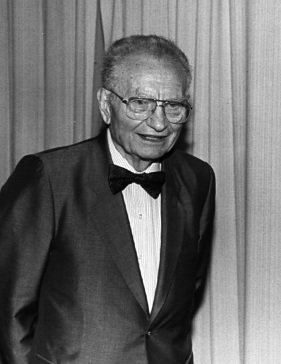
Paul Samuelson
Economist
Artículo WikipediaFuente Dbpedia
Paul Anthony Samuelson (May 15, 1915 – December 13, 2009) was an American economist, and the first American to win the Nobel Memorial Prize in Economic Sciences. The Swedish Royal Academies stated, when awarding the prize, that he "has done more than any other contemporary economist to raise the level of scientific analysis in economic theory". Economic historian Randall E. Parker calls him the "Father of Modern Economics", and The New York Times considered him to be the "foremost academic economist of the 20th century".He was author of the largest-selling economics textbook of all time: Economics: An Introductory Analysis, first published in 1948.[citation needed] It was the second American textbook to explain the principles of Keynesian economics and how to think about economics, and the first one to be successful, and is now in its 19th edition, having sold nearly 4 million copies in 40 languages. James Poterba, former head of MIT's Department of Economics, noted that by his book, Samuelson "leaves an immense legacy, as a researcher and a teacher, as one of the giants on whose shoulders every contemporary economist stands". In 1996, when he was awarded the National Medal of Science, considered America's top science honor, President Bill Clinton commended Samuelson for his "fundamental contributions to economic science" for over 60 years.He entered the University of Chicago at age 16, during the depths of the Great Depression, and received his PhD in economics from Harvard. After graduating, he became an assistant professor of economics at Massachusetts Institute of Technology (MIT) when he was 25 years of age and a full professor at age 32. In 1966, he was named Institute Professor, MIT's highest faculty honor. He spent his career at MIT where he was instrumental in turning its Department of Economics into a world-renowned institution by attracting other noted economists to join the faculty, including Robert M. Solow, Franco Modigliani, Robert C. Merton, Joseph E. Stiglitz, and Paul Krugman, all of whom went on to win Nobel Prizes.He served as an advisor to Presidents John F. Kennedy and Lyndon B. Johnson, and was a consultant to the United States Treasury, the Bureau of the Budget and the President's Council of Economic Advisers. Samuelson wrote a weekly column for Newsweek magazine along with Chicago School economist Milton Friedman, where they represented opposing sides: Samuelson took the Keynesian perspective, and Friedman represented the Monetarist perspective. Samuelson died on December 13, 2009, at the age of 94.
Paul Samuelson
Fecha de nacimiento 1915-05-15
Año de nacimiento 1915
Fecha de defunción 2009-12-13
Año de defunción 2009
Numero individualizado de la Biblioteca Nacional Alemana 118605321

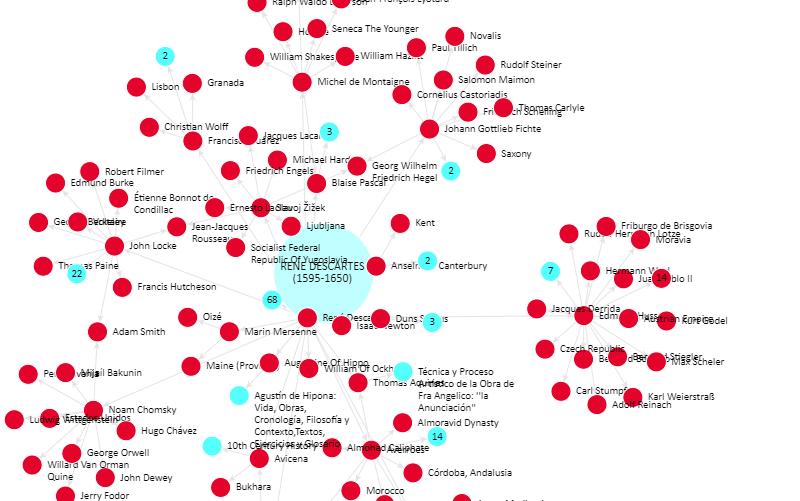
Mapa kontzeptuala: Paul Samuelson

Kide hauentzat bakarrik:

D/i/d/a/c/t/a/l/i/a
Saioa hasteko

Mira un ejemplo de lo que te pierdes

Kategoriak:

Fecha publicación: 6.9.2014

Aipatu

0

Aipatu nahi al duzu? Erregistratu o Hasi saioa

Zatoz Didactaliara

Navega entre 226539 recursos y 574237 personas

Regístrate >

O conéctate a través de:

Si ya eres usuario, Inicia sesión

Hezkuntza-eduki gehiago eskuratu nahi dituzu?

Saioa hasi Egin bat eskola batekin
x

Didactalia-ri Gehitzea Arrastra el botón a la barra de marcadores del navegador y comparte tus contenidos preferidos. Más info...


Jokoaren laguntza
Juegos de anatomía
Selecciona nivel educativo