What can I do?

226539 materialEducativo

textoFiltroFicha
  • I like 0
  • Visits 0
  • Comments 0
  • Save to
  • Actions

About this resource...

Scott S. Sheppard
Person
Wikipedia articleDbpedia source
Scott Sander Sheppard is an American astronomer in the Department of Terrestrial Magnetism at the Carnegie Institution for Science in Washington, DC. He attended Oberlin College as an undergraduate. Starting as a graduate student at the Institute for Astronomy at the University of Hawaii, he was credited with the discovery of many small moons of Jupiter, Saturn, Uranus, and Neptune. He has also discovered the first known trailing Neptune trojan, 2008 LC18 and the second known leading Neptune trojan, 2004 UP10. These discoveries showed that the Neptune trojan objects are mostly on highly inclined orbits. Scott Sheppard has also been involved in the discovery of possible dwarf planets such as 2010 EK139, 2010 KZ39, 2010 FX86, and 2013 FY27. He is a co-discoverer of the satellite of Kuiper belt object 2007 TY430. In 2014 Sheppard was the lead discoverer of the object with the most distant orbit known in the solar system 2012 VP113 (nicknamed Biden) and in 2015, along with Chad Trujillo, the distant TNO V774104. The similarity of the orbit of 2012 VP113 to other extreme Kuiper belt object orbits led Sheppard and Trujillo to propose that an unknown Super-Earth mass planet (2-15 Earth masses) in the outer solar system beyond 200 AU and up to 1500 AU is shepherding these smaller bodies into similar orbits (see Planet X or Planet Nine). Among the named moons in whose discovery he has been involved are: Jupiter <br />* Themisto (2000), first discovered by Charles Kowal in 1975 <br />* Harpalyke (2000) <br />* Praxidike (2000) <br />* Chaldene (2000) <br />* Isonoe (2000) <br />* Erinome (2000) <br />* Taygete (2000) <br />* Kalyke (2000) <br />* Megaclite (2000) <br />* Iocaste (2000) <br />* Dia (2000) <br />* Euporie (2001) <br />* Orthosie (2001) <br />* Euanthe (2001) <br />* Thyone (2001) <br />* Hermippe (2001) <br />* Pasithee (2001) <br />* Aitne (2001) <br />* Eurydome (2001) <br />* Autonoe (2001) <br />* Sponde (2001) <br />* Kale (2001) <br />* Arche (2002) <br />* Eukelade (2003) <br />* Helike (2003) <br />* Aoede (2003) <br />* Hegemone (2003) <br />* Kallichore (2003) <br />* Cyllene (2003) <br />* Mneme (2003) <br />* Thelxinoe (2003) <br />* Carpo (2003) <br />* Kore (2003) <br />* Herse (2003) <br />* S/2003 J 2 (2003) <br />* S/2003 J 3 (2003) <br />* S/2003 J 4 (2003) <br />* S/2003 J 5 (2003) <br />* S/2003 J 9 (2003) <br />* S/2003 J 10 (2003) <br />* S/2003 J 12 (2003) <br />* S/2003 J 15 (2003) <br />* S/2003 J 16 (2003) <br />* S/2003 J 18 (2003) <br />* S/2003 J 19 (2003) <br />* S/2003 J 23 (2003) <br />* S/2011 J 1 (2011) <br />* S/2011 J 2 (2011)Saturn <br />* Narvi (2003) <br />* Fornjot (2004) <br />* Farbauti (2004) <br />* Aegir (2004) <br />* Bebhionn (2004) <br />* Hati (2004) <br />* Bergelmir (2004) <br />* Fenrir (2004) <br />* Bestla (2004) <br />* Hyrrokkin (2004) <br />* Kari (2004) <br />* S/2004 S 7 (2004) <br />* S/2004 S 12 (2004) <br />* S/2004 S 13 (2004) <br />* S/2004 S 17 (2004) <br />* Loge (2006) <br />* Surtur (2006) <br />* Skoll (2006) <br />* Greip (2006) <br />* Jarnsaxa (2006) <br />* S/2006 S 1 (2006) <br />* S/2006 S 3 (2006) <br />* Tarqeq (2007) <br />* S/2007 S 2 (2007) <br />* S/2007 S 3 (2007)Uranus <br />* Margaret (2003)Neptune <br />* Psamathe (2003)
Birth date 1977-01-01

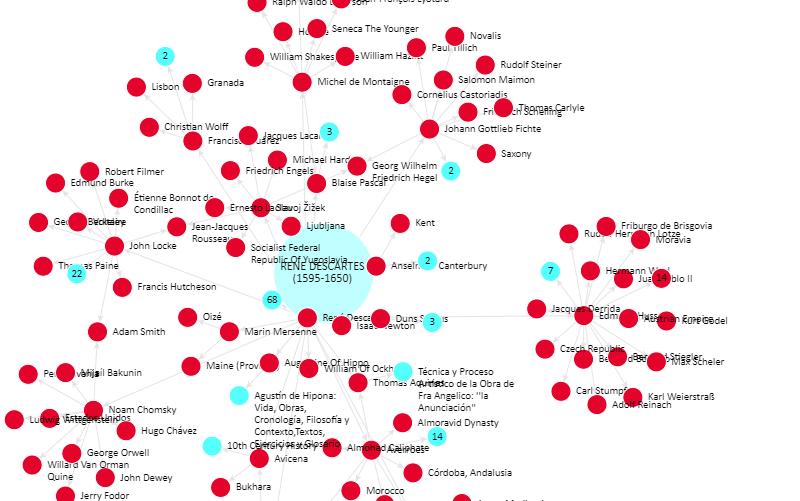
Conceptual map: Scott S. Sheppard

Exclusive content for members of

D/i/d/a/c/t/a/l/i/a
Sign in

Mira un ejemplo de lo que te pierdes

Categories:

Fecha publicación: 23.3.2020

Comment

0

Do you want to comment? Sign up or Sign in

Join Didactalia

Browse among 226539 resources and 574237 people

Regístrate >

O conéctate a través de:

Si ya eres usuario, Inicia sesión

Do you want to access more educational content?

Sign in Join a class
x

Add to Didactalia Arrastra el botón a la barra de marcadores del navegador y comparte tus contenidos preferidos. Más info...


Game help
Juegos de anatomía
Selecciona nivel educativo