
Cargando...

What can I do?
tipo de documento Lessons
This lesson will expand knowledge of the following contents:
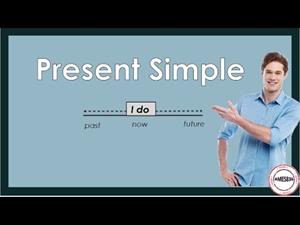
The simple present, present simple or present indefinite is one of the verb forms associated with the present tense in modern English. It is commonly referred to as a tense, although it also encodes certain information about aspect in addition to present time. The simple present is the most commonly used verb form in English, accounting for more than half of verbs in spoken English.
It is called "simple" because its basic form consists of a single word (like write or writes), in contrast with other present tense forms such as the present progressive (is writing) and present perfect (has written). For nearly all English verbs the simple present is identical to the base form (dictionary form) of the verb, except when the subject is third-person singular, in which case the ending -(e)s is added. There are a few verbs with irregular forms, the most notable being the copula be, which has the simple present forms am, is, and are.
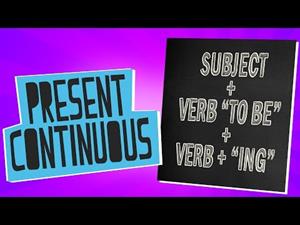
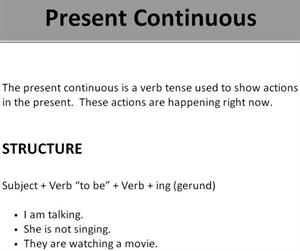
The present Continuous, also called the present progressive, is a verb form used in modern English that combines the present tense with the continuous aspect. It can be employed in both the indicative and subjunctive moods. Approximately 5% of verbs in spoken English are in the present continuous form.
Terminology:
Protagonists:
Credits: the previous information has been extracted from the following wikipedia articles
This lesson will expand knowledge of the following contents:
The simple present, present simple or present indefinite is one of the verb forms associated with the present tense in modern English. It is commonly referred to as a tense, although it also encodes certain information about aspect in addition to present time. The simple present is the most commonly used verb form in English, accounting for more than half of verbs in spoken English.
It is called "simple" because its basic form consists of a single word (like write or writes), in contrast with other present tense forms such as the present progressive (is writing) and present perfect (has written). For nearly all English verbs the simple present is identical to the base form (dictionary form) of the verb, except when the subject is third-person singular, in which case the ending -(e)s is added. There are a few verbs with irregular forms, the most notable being the copula be, which has the simple present forms am, is, and are.
The present Continuous, also called the present progressive, is a verb form used in modern English that combines the present tense with the continuous aspect. It can be employed in both the indicative and subjunctive moods. Approximately 5% of verbs in spoken English are in the present continuous form.
Terminology:
Protagonists:
Credits: the previous information has been extracted from the following wikipedia articles
Exclusive content for members of
Mira un ejemplo de lo que te pierdes
Si ya eres usuario, Inicia sesión
Add to Didactalia Arrastra el botón a la barra de marcadores del navegador y comparte tus contenidos preferidos. Más info...









Comment
0