What can I do?

226539 materialEducativo

textoFiltroFicha
  • I like 0
  • Visits 55
  • Comments 0
  • Save to
  • Actions

About this resource...

Leonard Jimmie Savage
Scientist
Wikipedia articleDbpedia source
Leonard Jimmie Savage (born Leonard Ogashevitz; 20 November 1917 – 1 November 1971) was an American mathematician and statistician. Nobel Prize-winning economist Milton Friedman said Savage was "one of the few people I have met whom I would unhesitatingly call a genius."He graduated from the University of Michigan and later worked at the Institute for Advanced Study in Princeton, New Jersey, the University of Chicago, the University of Michigan, Yale University, and the Statistical Research Group at Columbia University. Though his thesis advisor was Sumner Myers, he also credited Milton Friedman and W. Allen Wallis as statistical mentors.His most noted work was the 1954 book Foundations of Statistics, in which he put forward a theory of subjective and personal probability and statistics which forms one of the strands underlying Bayesian statistics and has applications to game theory.During World War II, Savage served as chief "statistical" assistant to John von Neumann, the mathematician credited with describing the principles upon which electronic computers should be based.One of Savage's indirect contributions was his discovery of the work of Louis Bachelier on stochastic models for asset prices and the mathematical theory of option pricing. Savage brought the work of Bachelier to the attention of Paul Samuelson. It was from Samuelson's subsequent writing that "random walk" (and subsequently Brownian motion) became fundamental to mathematical finance.In 1951 he introduced the minimax regret criterion used in decision theory.The Hewitt–Savage zero-one law is (in part) named after him, as is the Friedman–Savage utility function.
Birth date 1917-11-20
Birth year 1917
Death date 1971-11-01
Death year 1971

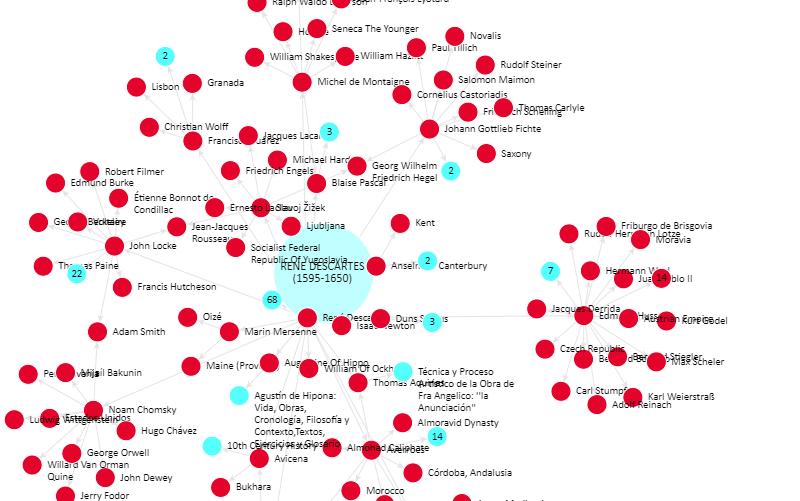
Conceptual map: Leonard Jimmie Savage

Exclusive content for members of

D/i/d/a/c/t/a/l/i/a
Sign in

Mira un ejemplo de lo que te pierdes

Categories:

Fecha publicación: 9.9.2014

Comment

0

Do you want to comment? Sign up or Sign in

Join Didactalia

Browse among 226539 resources and 574244 people

Regístrate >

O conéctate a través de:

Si ya eres usuario, Inicia sesión

Do you want to access more educational content?

Sign in Join a class
x

Add to Didactalia Arrastra el botón a la barra de marcadores del navegador y comparte tus contenidos preferidos. Más info...


Game help
Juegos de anatomía
Selecciona nivel educativo