What can I do?

226539 materialEducativo

textoFiltroFicha
  • I like 0
  • Visits 8
  • Comments 0
  • Save to
  • Actions

About this resource...

Formal language
Dbpedia
Wikipedia articleDbpedia source
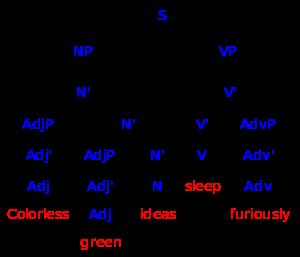
In logic, mathematics, computer science, and linguistics, a formal language consists of words whose letters are taken from an alphabet and are well-formed according to a specific set of rules. The alphabet of a formal language consists of symbols, letters, or tokens that concatenate into strings of the language. Each string concatenated from symbols of this alphabet is called a word, and the words that belong to a particular formal language are sometimes called well-formed words or well-formed formulas. A formal language is often defined by means of a formal grammar such as a regular grammar or context-free grammar, which consists of its formation rules. In computer science, formal languages are used among others as the basis for defining the grammar of programming languages and formalized versions of subsets of natural languages in which the words of the language represent concepts that are associated with particular meanings or semantics. In computational complexity theory, decision problems are typically defined as formal languages, and complexity classes are defined as the sets of the formal languages that can be parsed by machines with limited computational power. In logic and the foundations of mathematics, formal languages are used to represent the syntax of axiomatic systems, and mathematical formalism is the philosophy that all of mathematics can be reduced to the syntactic manipulation of formal languages in this way. The field of formal language theory studies primarily the purely syntactical aspects of such languages—that is, their internal structural patterns. Formal language theory sprang out of linguistics, as a way of understanding the syntactic regularities of natural languages.
Lenguaje formal

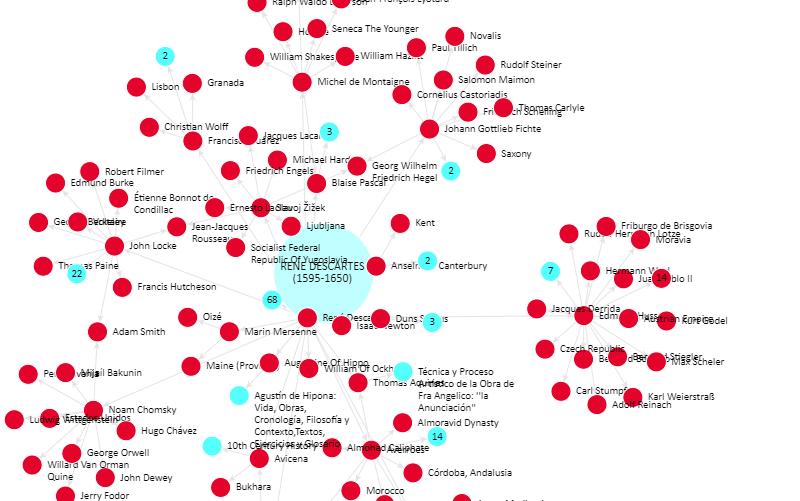
Conceptual map: Lenguaje formal

Exclusive content for members of

D/i/d/a/c/t/a/l/i/a
Sign in

Mira un ejemplo de lo que te pierdes

Categories:

Tags:

Fecha publicación: 8.10.2017

Comment

0

Do you want to comment? Sign up or Sign in

Join Didactalia

Browse among 226539 resources and 574244 people

Regístrate >

O conéctate a través de:

Si ya eres usuario, Inicia sesión

Do you want to access more educational content?

Sign in Join a class
x

Add to Didactalia Arrastra el botón a la barra de marcadores del navegador y comparte tus contenidos preferidos. Más info...


Game help
Juegos de anatomía
Selecciona nivel educativo