What can I do?

226539 materialEducativo

textoFiltroFicha

John Rawls

tipo de documento Wikipedia article

  • I like 0
  • Visits 50
  • Comments 0
  • Save to
  • Actions

About this resource...

John Rawls
Wikipedia articleDbpedia source
John Bordley Rawls (/r??lz/; February 21, 1921 ? November 24, 2002) was an American philosopher and a leading figure in moral and political philosophy. He held the James Bryant Conant University Professorship at Harvard University and the Fulbright Fellowship at Christ Church, Oxford. Rawls received both the Schock Prize for Logic and Philosophy and the National Humanities Medal in 1999, the latter presented by President Bill Clinton, in recognition of how Rawls' work "helped a whole generation of learned Americans revive their faith in democracy itself."His magnum opus, A Theory of Justice (1971), was hailed at the time of its publication as "the most important work in moral philosophy since the end of World War II," and is now regarded as "one of the primary texts in political philosophy." His work in political philosophy, dubbed Rawlsianism, takes as its starting point the argument that "the most reasonable principles of justice are those everyone would accept and agree to from a fair position." Rawls employs a number of thought experiments ? including the famous veil of ignorance ? to determine what constitutes a fair agreement in which "everyone is impartially situated as equals," in order to determine principles of social justice. He is one of the major thinkers in the tradition of liberal political philosophy. English philosopher Jonathan Wolff argues that "while there might be a dispute about the second most important political philosopher of the 20th century, there could be no dispute about the most important: John Rawls."
Birth date 1921-02-21
Birth year 1921
Death date 2002-11-24
Death year 2002
Era 20th-century philosophy
Individualised gnd number 118598678
Main interest Liberalism Political philosophy

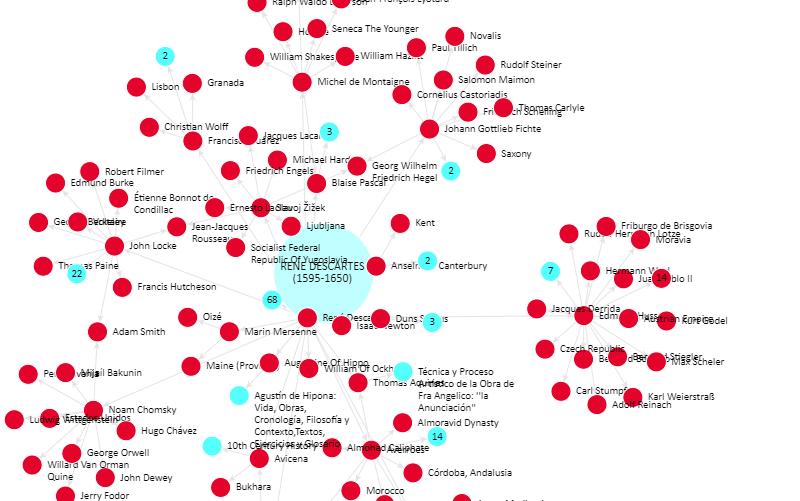
Conceptual map: John Rawls

Exclusive content for members of

D/i/d/a/c/t/a/l/i/a
Sign in

Mira un ejemplo de lo que te pierdes

Categories:

Fecha publicación: 6.9.2014

Comment

0

Do you want to comment? Sign up or Sign in

Join Didactalia

Browse among 226539 resources and 574244 people

Regístrate >

O conéctate a través de:

Si ya eres usuario, Inicia sesión

Do you want to access more educational content?

Sign in Join a class
x

Add to Didactalia Arrastra el botón a la barra de marcadores del navegador y comparte tus contenidos preferidos. Más info...


Game help
Juegos de anatomía
Selecciona nivel educativo