226539 materialEducativo

textoFiltroFicha
  • Gústame 0
  • Visitas 7
  • Comentarios 0
  • Gardar en
  • Accións

Sobre este recurso...

Cathode ray
DbpediaThing
Artículo WikipediaFuente Dbpedia
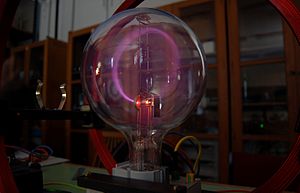
Cathode rays (also called an electron beam or e-beam) are streams of electrons observed in vacuum tubes. If an evacuated glass tube is equipped with two electrodes and a voltage is applied, the glass opposite of the negative electrode is observed to glow, due to electrons emitted from and travelling perpendicular to the cathode (the electrode connected to the negative terminal of the voltage supply). They were first observed in 1869 by German physicist Johann Hittorf, and were named in 1876 by Eugen Goldstein Kathodenstrahlen, or cathode rays.Electrons were first discovered as the constituents of cathode rays. In 1897 British physicist J. J. Thomson showed the rays were composed of a previously unknown negatively charged particle, which was later named the electron. Cathode ray tubes (CRTs) use a focused beam of electrons deflected by electric or magnetic fields to create the image in a classic television set.
Rayos catódicos

Mapa conceptual: Rayos catódicos

Contido exclusivo para membros de

D/i/d/a/c/t/a/l/i/a
Iniciar sesión

Mira un ejemplo de lo que te pierdes

Categorías:

Fecha publicación: 20.4.2015

Comentar

0

Queres comentar? Rexístrate ou inicia sesión

Úneche a Didactalia

Navega entre 226539 recursos e 574237 persoas

Regístrate >

O conéctate a través de:

Si ya eres usuario, Inicia sesión

Queres acceder a máis contidos educativos?

Iniciar sesión Únete a unha clase
x

Engadir a Didactalia Arrastra el botón a la barra de marcadores del navegador y comparte tus contenidos preferidos. Más info...


Axuda do xogo
Juegos de anatomía
Selecciona nivel educativo